Attracted by the scrumptious look and spicy flavour, Spanish paella is one of the European dishes that I’m most interested in. Paella is originally from Valencia, on east coast of Spain. As the Valencian meaning of the name suggests, paella is cooked in a frying pan. The common ingredients are short grain rice, chicken, rabbit, sometimes snails, different varieties of beans, and vegetables. On the Mediterranean coast, meat is replaced with seafood to make paella, and seafood paella has become the most globally popular recipe. The aromatic smoke comes from orange and pine branches as fuels. Traditionally, diners consume directly out of the pan instead of serving in plates, and this way of consumption is abandoned by modern eating habits.
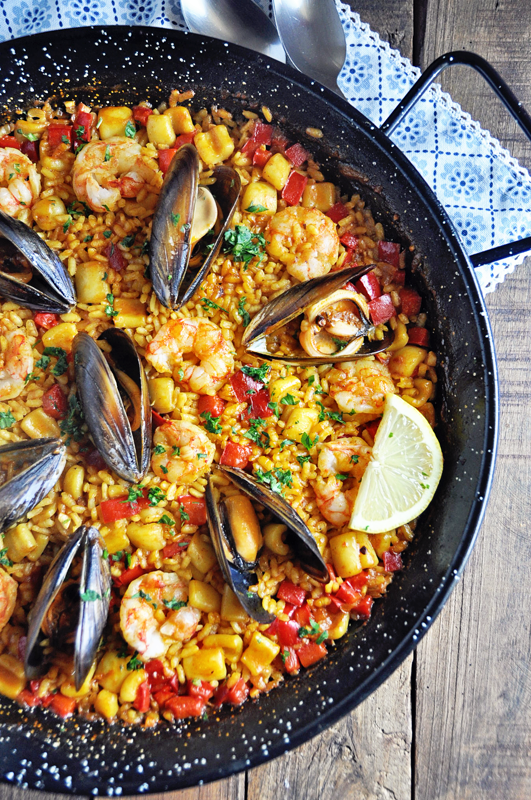
Paella plays a significant role in representing Valencian culture. Similar to la olla podrida, paella is a fusion dish lack of complexity in cooking techniques and rarity of ingredients. Rice and beans as the major component are two staple food in Spain as there are economic. Poor Valencian families would purely use snails as the only meat in paella. Spanish food historian Lourdes March states that this dish unites two important cultures as people use Roman utensil to cook food brought by the Arab. It has developed into a custom to prepare enormous paella for crowding people at mass gatherings, such as festivals and campaigns.
 Grace eats Europe